Unexpected Stories
Lynn Pruett (Laughing Spring) & Kayla Bush (D.O.V.A. Research)
2025 Intercultural Microgrant Recipients
Kentucky Foundation for Women Fund
The Elm Bend Revival
Words by Lynn Pruett, Video by Truman Miller
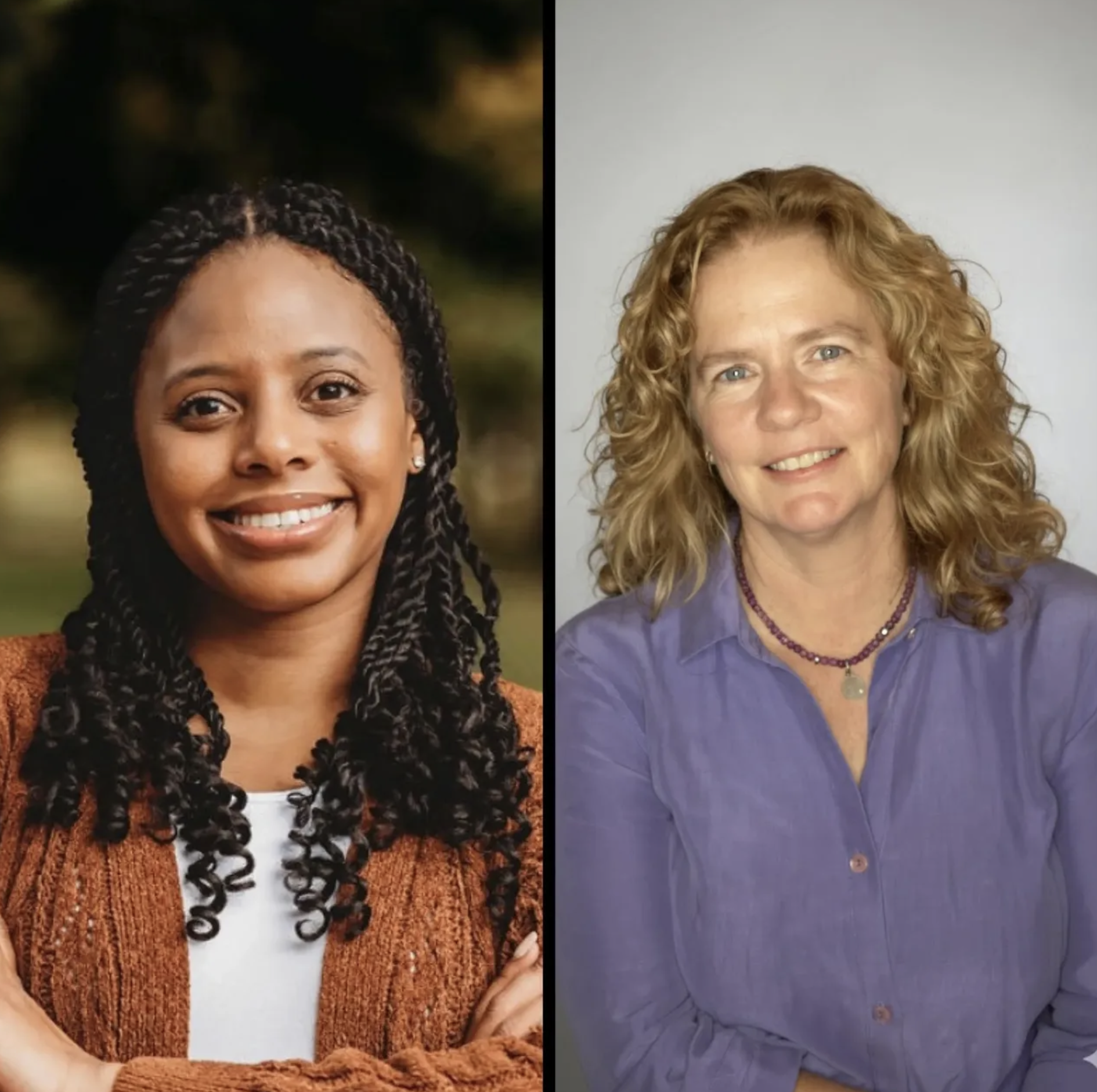
Kayla Bush & Lynn Pruett
Last fall, Kayla Bush and I decided to put our local and family research into Elm Bend in south Woodford County together for this project, "Unexpected Stories." We decided to present the unexpected stories of people here against the backdrop of the commonly-understood history of place after slavery ended. Our plan included creating a website, a video, and giving one presentation about the project.
ElmBendKy.com is live! https://elmbendky.com
Thanks to Kayla who built the site.
It is the start of a site that we expect to be interactive and to grow as an archive of Elm Bend, its community past and present.
We used multiple kinds of research to create the website. We spent time in the Woodford County deed room looking at property transfers. We wanted to know how Elm Bend’s population changed from majority local-born black landowners to white ownership from elsewhere. We found an Unexpected Story: The deed to the Elm Bend School in 1885, forty years pre-dating the building of the Rosenwald Elm Bend School. It was believed by historians that Rosenwald brought education to Elm Bend.
We researched cemeteries. One Thursday, I photographed head stones in the Polk Memorial Baptist Church cemetery. I took photos of Jeff (1858-1960) and Wallace Johnson’s memorial stone. Jeff lived to be 102 and Wallace’s name was similar to Wallace Johnston, a former owner of the Johnston farm. The next Wednesday, while searching the Herald-Leader archive for Elm Bend, I turned up an interview of Mattie Johnson Gray, the daughter of Jeff and Wallace. It seems creative enterprises invite serendipity. Mattie Johnson Gray was a cornerstone Unexpected Story. She was teaching at the old Elm Bend School in 1915 and was THE teacher that secured Rosenwald support to build the newer, much needed Elm Bend school building in 1925.
We interviewed elders in Kayla’s family: Anna Katherine Caise, almost 95, and Herbert Bush, about Elm Bend. The story of public school education for black people can be traced through the Caise family, from 1885 to current PhDs and medical professionals. Anna went to segregated schools. Herbert integrated both the Woodford County school system and the boys’ high school basketball team.
We drove the roads of Elm Bend to establish its boundaries and locate buildings still in use and take photos to prevent total erasure from records.
We walked the creek surrounding the Johnston Farm to confirm stories of people who used to come down the ridge from the Sutherland Farm and cross the creek near an old house where Jacob and America Caise had lived. The house is gone but a stone foundation and crockery pieces mark the spot. We see an old road along the creek coming from near the Johnston Bridge. A PhD student, Brittany Thompson, did a preliminary site visit to check for graves, as slave cemeteries are her specialty. She says the sites and landscape look like places where formerly enslaved people lived and buried their dead. We speculate that there were other homes along the creek after slavery. The 1880 census shows houses between the known and still standing residences of white landowners: Johnstons, McCauleys, Holloways, and Lambkins.
We recorded many unexpected stories, particularly those of the remarkable Caise family, the shift from farming to other sources of income and the attendant loss of community and a relationship to the land, the true story of black students’ educational journey from segregation to integration, and the discovery of school girl Ruth Emma Wheat’s signature on the wall in the Johnston house.
—Lynn Pruett (Laughing Spring) & Kayla Bush (D.O.V.A. Research)
Learn more
The Kentucky Intercultural Microgrant Program is a seed grant to support two or more individuals or organizations collaborating across distance, difference, or sector on projects that celebrate and connect Kentucky's people and places. Our 2025 funding partners included Kentucky Arts Council, Fund for the Arts, Kentucky Foundation for Women, Kentucky Waterways Alliance, EarthTools, and individual donors. Learn more at kyrux.org/microgrants